
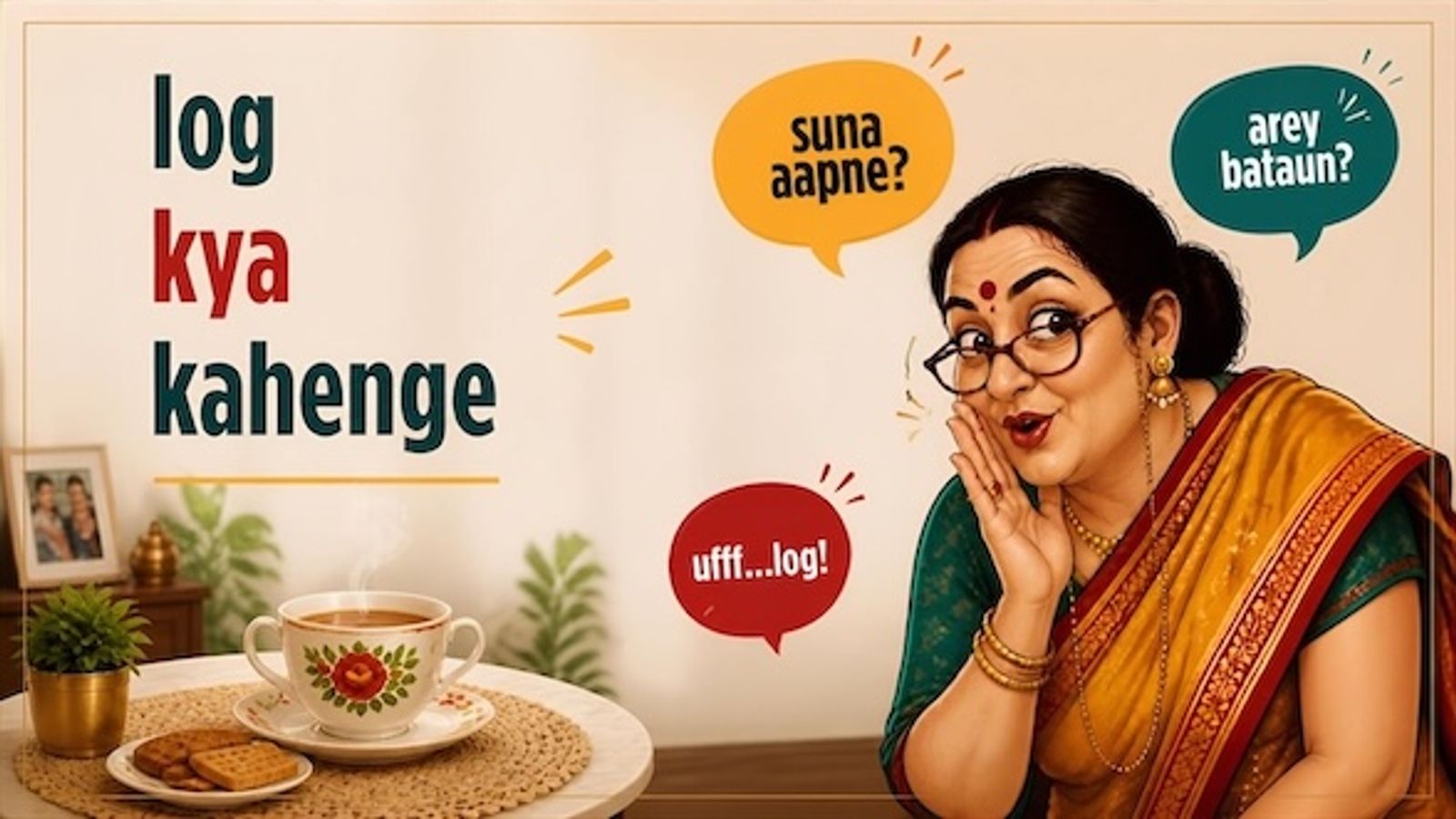
Log Kya Kahenge
A relatable look at the almost universal South Asian experience of "log kya kahenge" and how "what will people say?" shapes who we become.
Sumati Sharma · · 4 min read
I Was Just Dancing: Growing Up Between Culture, Expectations & Log Kya Kahenge
I have loved Bhangra for as far back as I can remember. The music. The energy. And especially the sound of the dhol. Put on a good Bhangra song at a family gathering or party and I wanted to dance. Honestly, I still do.
But growing up, it seemed there was always an Auntieji nearby ready with a comment.
“Bhangra is for boys.”
Or some version of:
“Look at her jumping around like a boy. That’s not very ladylike.”
The funny thing is, I wasn’t trying to challenge gender roles. I wasn’t making a statement or trying to rebel against my culture.
I was just dancing.
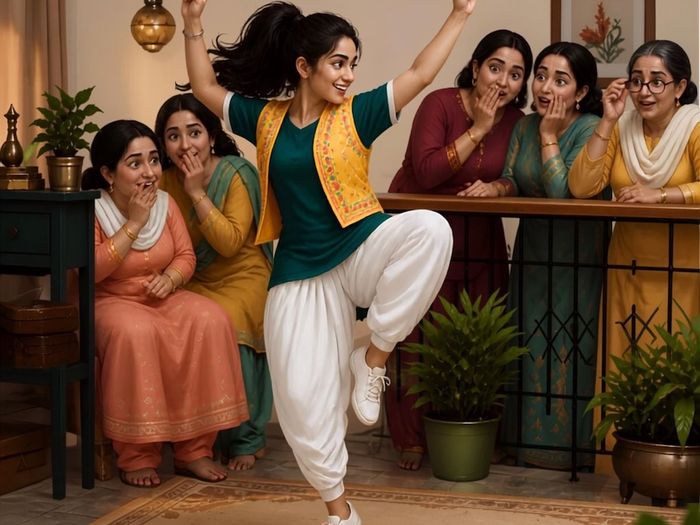
And dancing made me happy. But those little comments have a way of staying with you.
I Wasn’t Particularly Good at Being the “Right” Kind of Girl
Bhangra wasn’t the only place this showed up. I was a go-getter. I was ambitious, studious and naturally drawn to leadership. If there was an opportunity to step up, I usually wanted to. That wasn’t always received particularly well either.
I loved floor hockey, which apparently made me a “tomboy.” And when I wanted to be captain during intramurals, that was somehow even more boyish. Again, I wasn’t trying to prove anything.
I just really liked floor hockey. And I wanted to be captain.
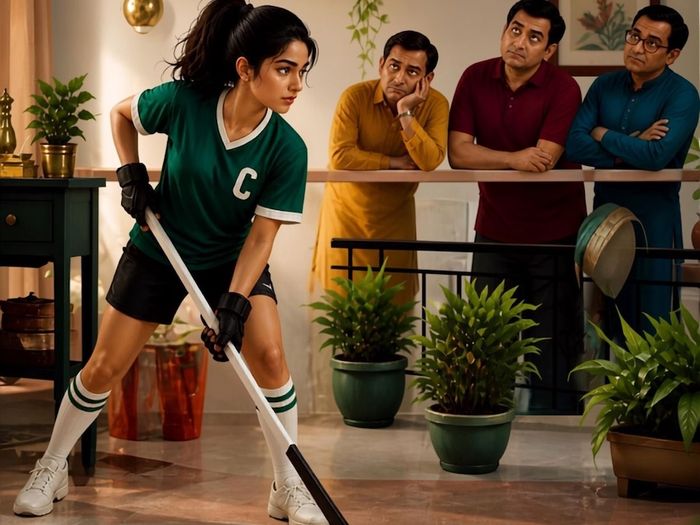
Looking back, there’s something almost funny about it. But underneath those comments was a message I couldn’t have understood at the time.
There seemed to be an invisible set of rules about what kind of girl I was supposed to be. Be smart, but don’t be too outspoken. Be successful, but don’t take up too much space. Be confident, but not too confident. Be feminine—but according to someone else’s definition of what femininity should look like.
And apparently, dance…just not quite so enthusiastically.
Before I Had the Words for It
Years later, I now have the language for things that little Nav couldn’t possibly have understood: cultural conditioning, gender expectations, belonging, dual identity, people-pleasing and log kya kahenge.
Back then, I just knew that other people seemed to have opinions about who I was supposed to be. Sadly, when you’re a child, those opinions matter.
You begin noticing which girls are praised and which ones are talked about. You notice what makes the aunties whisper. You learn when you’ve been a “good daughter” and when you’ve crossed an invisible line.
Nobody necessarily sits you down and explains the rules. You absorb them. That’s part of the power of log kya kahenge—“What will people say?” Eventually, nobody even has to say it.
You start asking it yourself.
Growing Up Between Two Worlds
Like many second-generation South Asian daughters, I was also growing up between different messages. Outside my cultural world, girls were being encouraged to speak up, become leaders, be independent and figure out who they wanted to be.
Within it, there could also be messages about being respectful, knowing your place, maintaining family reputation and not drawing the wrong kind of attention.
There were things I loved about being Punjabi, and there still are. The music. The language. The humor. The connection. The traditions. The sense of family and community.
This isn’t a story about rejecting any of that.
It’s about what happens when you’re trying to hold onto where you come from while also figuring out who you are. For many South Asian daughters, those two things don’t always fit together easily.
Then the Auntieji Voice Becomes Your Own
As a child, someone else tells you you’re too loud, too ambitious, too sensitive, too independent or too much. As an adult, sometimes you no longer need them to say it.
You start doing it yourself.
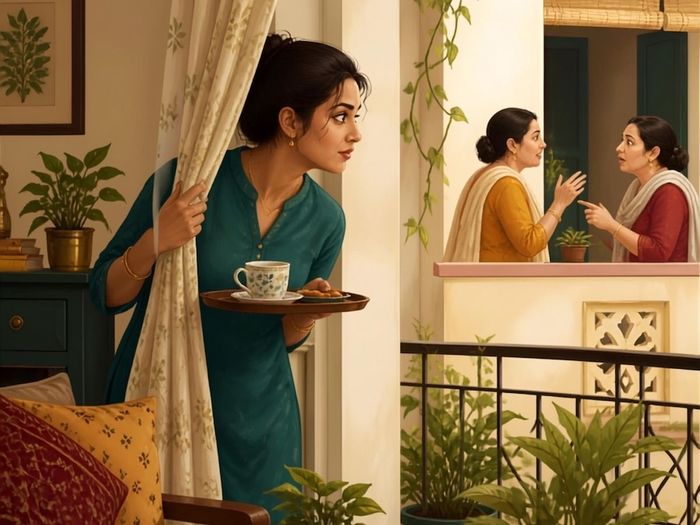
You second-guess the boundary you just set. You over-explain a perfectly reasonable decision. You worry about disappointing people before you’ve even asked yourself what you want. You make yourself smaller without realizing you’re doing it.
And sometimes the little girl who was told she was “too much” grows into a woman who works incredibly hard to make sure she is never too much for anyone.
This is something I understand differently now, not only through my own lived experience but through the work I do as a therapist.
I see versions of it in the stories South Asian women bring into the therapy room.
Different families. Different experiences. Different wounds. But often there is a familiar question underneath them:
How do I become myself without feeling like I’m betraying where I come from?
Closing Remarks
These experiences are part of what eventually led me to co-found Saath Wellness, a space where we can have honest conversations about South Asian mental health, culture, identity and the experiences that shape us.
Through this blog, Sim and I hope to keep those conversations going and explore the things many of us grew up with but didn’t always have words for.
Consider this the beginning. We have a lot to talk about. ❤️
Saath in wellness & healing,
Nav